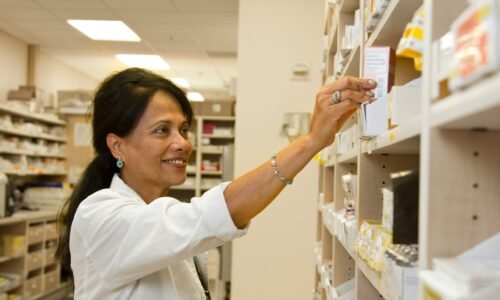
Pharmacy technicians help pharmacists get the right medication to the right patient safely. They work in retail and hospital pharmacies, mail-order and specialty pharmacies, and long-term care, and the role is a springboard to many healthcare careers.
This course walks you through what you need before formal training: pharmacy practice and ethics, medical terminology and abbreviations, how drugs work and the major drug classes by body system, federal pharmacy law including controlled substances, prescription intake and insurance processing, pharmacy calculations, medication safety, and non-sterile, sterile and hazardous compounding standards.
The final module explains, step by step, the national certification exams (PTCB’s CPhT and NHA’s ExCPT), how state registration and licensing work (with California as a detailed example), and how to find an externship and your first pharmacy job.
Important: This is pre-enrollment preparation. It is not a state-approved training program and does not by itself qualify you for certification or licensure. Requirements vary by state; always check your state Board of Pharmacy.
Features
- 11 step-by-step modules from basics to certification-ready
- Drug classes by body system with name-recognition tips
- Pharmacy math with worked examples
- Federal law, controlled substances and prescription processing
- USP 795, 797 and 800 compounding basics
- PTCB/NHA and California licensing roadmap, plus SQ3R study guides
Target audiences
- Career changers seeking an entry-level healthcare role
- Pharmacy clerks and cashiers moving into technician work
- Students preparing to enter a pharmacy technician training program
- Employers upskilling pharmacy support staff
Requirements
- High school diploma or GED (required by certification bodies and most states)
- Basic math: fractions, decimals and percentages
- Ability to pass a background check, which most states and employers require
Curriculum
- 12 Sections
- 41 Lessons
- 10 Weeks
- Module 1: The Pharmacy Technician Career Path5 ItemsWhat technicians do, where they work, and the certification and licensing roadmap.
- Module 2: Pharmacy Practice, Ethics & Privacy4 ItemsPractice settings, the pharmacist-technician team, ethics and HIPAA.
- Module 3: Medical Terminology & Abbreviations4 ItemsWord parts, body-system terms, sig codes and error-prone abbreviations.
- Module 4: Pharmacology Fundamentals5 ItemsDrug names, dosage forms, routes, how drugs move through the body, and drug-name stems.
- Module 5: Drug Classes by Body System5 ItemsCardiovascular, respiratory, GI, endocrine, nervous system and anti-infective drugs.
- Module 6: Pharmacy Law & Controlled Substances5 ItemsFederal drug law, DEA schedules and the rules technicians follow every day.
- Module 7: Prescriptions, Order Entry & Insurance5 ItemsReading and entering prescriptions, NDCs, and third-party billing.
- Module 8: Pharmacy Calculations5 ItemsConversions, dosing, days supply, concentrations, dilutions and IV rates.
- Module 9: Medication Safety & Quality Assurance4 ItemsMedication errors, look-alike/sound-alike drugs, high-alert medications and reporting.
- Module 10: Compounding, Storage & Inventory5 ItemsUSP 795, 797 and 800, storage requirements and inventory management.
- Module 11: Certification, Licensure & Your First Job5 ItemsPTCB and NHA exams, state licensing (California example), externships and jobs.
- Final Assessment1 ItemComprehensive exam covering all modules. Pass to complete the course.
FAQs
Instructor