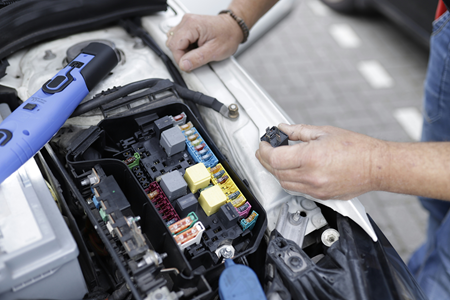
EV Auto Repair Basics: Introduction to Electric Vehicle Service
Electric and hybrid vehicles are now a routine part of every service bay, and shops need technicians who can work on them safely. This course takes you from electrical basics to how EVs are built, how high-voltage systems are de-energized and verified safe, how batteries, motors, inverters and chargers work, and what EV maintenance and diagnosis look like day to day.
The final modules lay out the credential path step by step (ASE A6, A8 and L3, ASE’s xEV electrical safety certifications, and manufacturer programs) and show you how to land an entry-level role or apprenticeship.
Important: This is pre-enrollment preparation. It does not qualify you to work on high-voltage systems. That requires hands-on training with the correct equipment, under supervision, following the vehicle manufacturer’s procedures and your employer’s electrical safety program.
Features
- 11 step-by-step modules from electrical basics to job-ready
- High-voltage safety and de-energizing explained in plain language
- Batteries, motors, inverters and charging systems demystified
- ASE and manufacturer certification roadmap
- SQ3R study guides to prepare you for formal training
Target audiences
- Career changers interested in automotive technology
- Current auto technicians and lube techs moving into EV work
- Fleet, dealership and shop staff who work around electrified vehicles
- Students preparing to enter a college or manufacturer EV program
Requirements
- Basic math (multiplication and division)
- Interest in automotive or electrical work; no prior experience needed
- A valid driver's license is expected by most automotive employers
Curriculum
- 12 Sections
- 42 Lessons
- 8 Weeks
- Module 1: The EV Technician Career Path5 ItemsWhat EV technicians do, where they work, and the credential roadmap.
- Module 2: Electrical Fundamentals5 ItemsVoltage, current, resistance, circuits and using a digital multimeter safely.
- Module 3: Electrified Vehicle Types & Architecture5 ItemsHEV, PHEV, BEV and FCEV, and the major high-voltage components.
- Module 4: High-Voltage Safety I: Hazards & PPE5 ItemsShock and arc-flash hazards, safety standards and personal protective equipment.
- Module 5: High-Voltage Safety II: De-energizing & Verifying5 ItemsHow technicians make a vehicle electrically safe, and damaged-vehicle precautions.
- Module 6: High-Voltage Batteries & Battery Management5 ItemsCells, modules and packs; chemistries; the BMS; thermal management and thermal runaway.
- Module 7: Motors, Inverters & Regenerative Braking4 ItemsHow electric drive units turn stored energy into motion and back again.
- Module 8: Charging Systems4 ItemsCharging levels, connectors, the onboard charger and charging problems.
- Module 9: EV Maintenance & Basic Diagnostics5 ItemsWhat changes in the service bay, lifting and towing, and the diagnostic process.
- Module 10: Certification & Training, Step by Step5 ItemsASE tests and experience rules, xEV safety certifications and manufacturer programs.
- Module 11: Landing Your First EV Role5 ItemsEntry-level roles, where to apply, tools and how to stand out.
- Final Assessment1 ItemComprehensive exam covering all modules. Pass to complete the course.
FAQs
Instructor